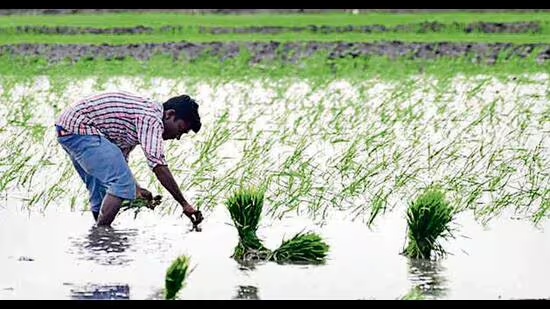
Agriculture is the backbone of India’s economy — yet, ironically, it remains one of the least understood and most under-communicated industries. While technology, manufacturing, and finance sectors actively invest in public relations to build narratives and trust, agriculture has often been left behind. That’s where PR in agriculture becomes essential — not as a luxury, but as a necessity for growth, education, and public trust.
Today, the Indian agricultural sector is evolving rapidly, driven by startups, digital platforms, sustainable innovations, and government reforms. However, much of this progress goes unnoticed by the general public and even by key stakeholders like policymakers, investors, and consumers. The reason? A lack of structured communication and storytelling. Effective PR in agriculture can change that.
Why the Agricultural Sector Needs PR More Than Ever
For decades, agriculture has been perceived as a traditional, rural, and unorganized sector. While it employs over 40% of India’s workforce and contributes significantly to the GDP, it is rarely seen as “modern” or “innovative.” This perception problem is not due to lack of progress — but lack of visibility.
Public relations serves as the bridge between the people who produce and the people who consume. Through strategic storytelling, transparent communication, and media engagement, PR in agriculture helps the sector earn the recognition, credibility, and investment it deserves.
When used effectively, PR can help agricultural organizations:
- Communicate new technologies, policies, and sustainability practices.
- Build trust between farmers, consumers, and corporations.
- Attract investors, collaborators, and skilled talent.
- Counter misinformation and build clarity on agricultural issues.
The Historical Gap: Agriculture and Communication
Historically, Indian agriculture has operated in silos. Farmers, cooperatives, and local traders relied heavily on word-of-mouth and informal community channels. There was no structured communication strategy or coordinated messaging. As a result, public understanding of agricultural challenges — from soil degradation to price volatility — has been limited or distorted.
This is where PR in agriculture can bridge the gap.
Public relations can help the sector shift from reactive communication (responding to crises like crop failures or farmer protests) to proactive communication — one that builds consistent awareness about progress, innovation, and resilience within the agricultural ecosystem.
The Role of PR in Agriculture: Beyond Media Coverage
Public relations in agriculture is not merely about issuing press releases or getting coverage in business pages. It’s about designing a sustained communication ecosystem that nurtures relationships across stakeholders — farmers, policymakers, agritech startups, financial institutions, media houses, and the public.
Here’s how PR in agriculture contributes to each stakeholder group:
1. For Farmers: Building Pride and Awareness
Farmers are not just producers — they are entrepreneurs and innovators. However, their stories are rarely told. Public relations can showcase farmer success stories, promote sustainable practices, and highlight the human face behind India’s food supply.
When farmers see themselves represented in national media, it builds pride, credibility, and a sense of belonging to a larger growth narrative.
2. For Agribusinesses: Building Brand Trust
Companies dealing in fertilizers, seeds, farm machinery, or agri-tech platforms need consumer and investor trust. Through PR in agriculture, businesses can communicate their R&D, impact stories, and sustainability initiatives.
For instance, showcasing how a particular innovation increased farmer productivity or reduced water usage helps position the company as both profit-oriented and purpose-driven.
3. For Policymakers and Institutions: Creating Informed Dialogue
Government policies in agriculture often face challenges during rollout due to lack of clear communication. PR helps bridge this by simplifying complex policies, building awareness among stakeholders, and collecting feedback from the ground up.
With structured PR in agriculture, policy dialogue becomes a two-way conversation, not a top-down directive.
4. For the Public: Educating and Connecting
Urban consumers today are increasingly conscious about what they eat. Yet, few truly understand where their food comes from or what farmers endure to bring it to their plate. Through documentaries, campaigns, and social media storytelling, PR in agriculture can humanize the food supply chain and make consumers more empathetic and informed.
The Impact of Digital Transformation on Agricultural PR
Over the past decade, the agricultural sector has undergone a silent digital revolution. From drone-based soil mapping to precision irrigation, from digital marketplaces to agri-fintech — the transformation is undeniable. However, the stories of this transformation are scattered and often fail to reach the mainstream.
Modern PR in agriculture uses digital tools — content marketing, influencer outreach, regional media, podcasts, and short-form videos — to connect with rural and urban audiences alike.
For example:
- Agritech startups use PR to educate farmers about their mobile platforms.
- NGOs use PR to highlight climate-resilient farming practices.
- Exporters use PR to showcase Indian produce globally.
The democratization of digital media means that agricultural communication no longer needs to depend solely on traditional newspapers or government campaigns. A well-executed PR in agriculture strategy can reach millions directly through smartphones, WhatsApp groups, and vernacular content.
PR in Agriculture as a Tool for Nation Building
Agriculture is not just an economic sector — it is the soul of India’s identity. Every major policy reform, from the Green Revolution to crop insurance, has shaped the nation’s social and economic structure. Yet, many citizens — especially urban youth — remain disconnected from this reality.
Public relations can play a transformative role in bridging that disconnect.
By building narratives around food security, farmer welfare, climate change, and rural entrepreneurship, PR in agriculture helps the nation see agriculture not as a challenge, but as a collective responsibility and opportunity.
It also strengthens India’s soft power globally. When international audiences see consistent communication around Indian produce, sustainability efforts, and export capabilities, it builds the reputation of India as a responsible agricultural leader.
How Agricultural PR Drives Sustainable Growth
Sustainability is the new global language of business. However, the agricultural sector is often blamed — sometimes unfairly — for emissions, deforestation, or water use. Instead of letting the narrative be dictated externally, proactive PR in agriculture allows the industry to tell its own story — with facts, data, and transparency.
By communicating sustainability practices — such as organic farming, crop diversification, renewable energy use, or regenerative agriculture — PR builds consumer trust and encourages industry accountability.
It also encourages collaboration between public and private sectors, as well as between traditional and modern farming communities.
A good PR in agriculture strategy doesn’t just promote; it educates, mobilizes, and unites. It helps ensure that every voice — from the smallholder farmer to the policymaker — is part of the national growth conversation.
Challenges and Opportunities in Agricultural PR
While the opportunities are immense, PR in agriculture comes with its own challenges.
- Language Diversity: India’s agriculture operates across 20+ regional languages, requiring localized communication.
- Limited Access to Media: Many farmers still rely on radio or local networks rather than digital channels.
- Perception Barriers: Agriculture is often seen as low-margin and outdated, making it harder to attract youth or investors.
Yet, every challenge is an opportunity in disguise. Regional storytelling, farmer-led content, visual campaigns, and public education programs can turn these barriers into pathways for connection.
By building grassroots communication systems and training rural communicators, PR in agriculture can create long-term, self-sustaining impact.
The Way Forward: A Strategic PR Framework for Agriculture
For PR in agriculture to truly transform the sector, it needs a structured, long-term framework that combines communication strategy, education, and collaboration.
1. Develop Sectoral Communication Hubs
Each state or cluster can have PR and communication hubs dedicated to agriculture — responsible for compiling success stories, farmer data, and innovation updates.
2. Collaborate with Educational and Research Institutions
Agri-universities and research centers can partner with PR professionals to translate technical findings into public knowledge. This helps bridge the gap between science and society.
3. Leverage Local and Vernacular Media
To reach real India, PR must speak the language of the farmer. Regional newspapers, radio stations, and social media influencers can play a huge role in democratizing agricultural information.
4. Measure Impact and Adapt
Modern PR in agriculture should be data-driven — tracking awareness levels, media coverage, sentiment analysis, and behavioral outcomes. This allows strategies to evolve dynamically.
Conclusion: Communication as Cultivation
Just as soil needs nurturing for seeds to grow, India’s agricultural sector needs communication to flourish. Without the right information ecosystem, progress remains invisible and innovation remains underappreciated.
PR in agriculture is no longer optional — it’s the foundation of transparency, awareness, and progress. It empowers farmers, strengthens brands, guides policies, and educates the public. Most importantly, it gives India’s most vital sector the voice it truly deserves.
As agriculture continues to modernize, its story must evolve too — and public relations is the medium through which that story can reach the world.
Because when agriculture communicates better, India grows stronger.